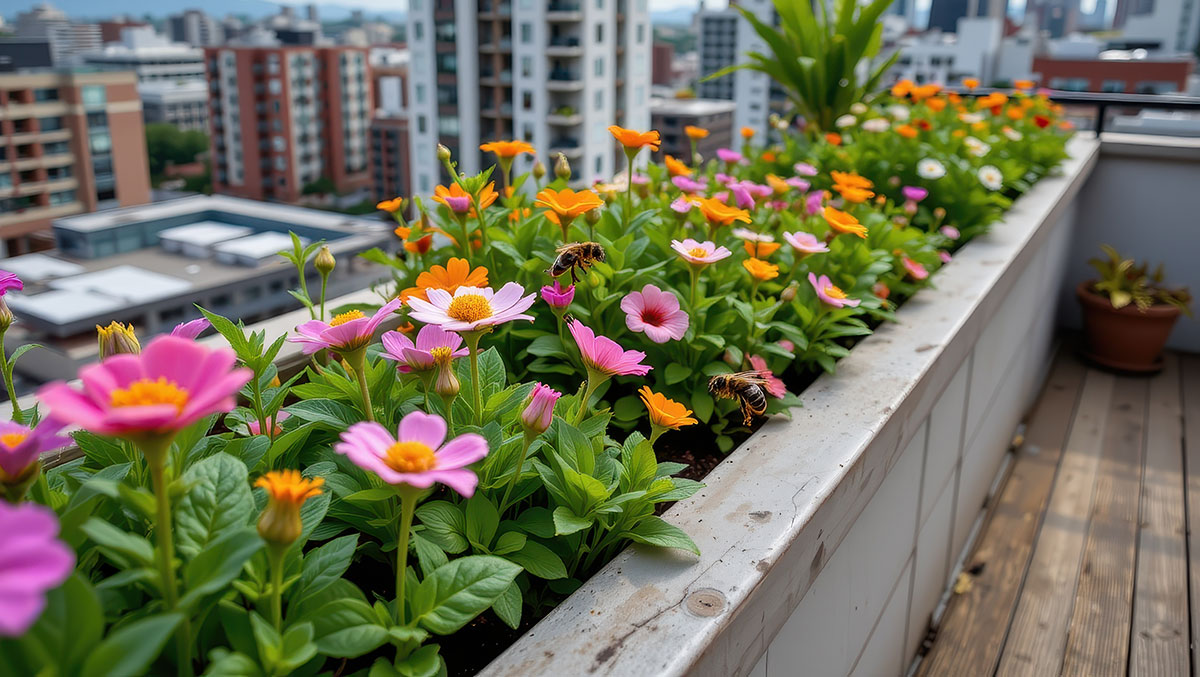
Designing a rooftop garden in Montreal is exciting, but it comes with real challenges. Our summers are warm and beautiful, but our winters are long, cold, and snowy. Over the years, I have learned that a successful rooftop garden in this city must be designed for all four seasons, not just the sunny ones.
As the founder of Saltarelli Outdoor Design, I have worked on rooftops across Montreal, from Westmount to Griffintown. Every project starts with the same goal. Create a space that looks beautiful in summer and still feels intentional in winter. A rooftop garden should not disappear when the first snowfall arrives. It should evolve with the seasons.
Start with the Structure
Before choosing plants, focus on the foundation of the space. Rooftops face strong winds, heavy snow loads, and wide temperature swings. Materials must be durable and weather-resistant.
I always recommend high-quality planters made from fiberglass, metal, or treated wood that can withstand freezing and thawing. Cheap containers crack quickly in our climate. Flooring is just as important. Composite decking or stone pavers hold up well and require less maintenance over time.
“I once redesigned a rooftop where the original wooden planters split after one winter,” I often tell clients. “We replaced them with insulated fiberglass containers, and they have held up beautifully through multiple seasons.”
Strong structure comes first. Plants and furniture come second.
Choose Winter-Hardy Plants
Plant selection makes or breaks a Montreal rooftop garden. The key is choosing species that can survive cold temperatures and wind exposure. Native and hardy plants perform best.
Evergreens for Year-Round Interest
Evergreens are essential. Boxwood, dwarf spruce, and juniper provide structure and color even when everything else is covered in snow. They prevent the rooftop from looking empty in winter.
I like to place evergreens strategically around seating areas or along railings. They create privacy in summer and visual interest in winter.
Hardy Perennials and Grasses
Ornamental grasses such as feather reed grass add movement and texture. Even after they dry in late fall, they look beautiful with frost or snow. Hardy perennials like sedum and coneflowers can survive harsh winters if planted properly in insulated containers.
“One rooftop in NDG had full sun and strong winds,” I remember. “We used sedum and hardy grasses that could handle exposure. After the first winter, the client called me surprised that everything came back stronger in spring.”
Success comes from choosing plants suited to the climate, not fighting against it.
Insulate and Protect
Winter survival is not just about plant choice. It is also about protection. Roots are more exposed on rooftops than in the ground.
I use insulated planters and add extra soil depth whenever possible. In late fall, I recommend wrapping containers with burlap or adding mulch to protect roots from extreme cold. Grouping planters together can also reduce wind exposure and heat loss.
Drainage is critical. Water must be able to escape before freezing temperatures arrive. Poor drainage leads to root damage and cracked containers.
Planning for winter in October saves frustration in March.
Design for Snow and Wind
Snow is part of life in Montreal. Instead of seeing it as a problem, I treat it as a design element.
Planters and structures should be placed where they will not block snow removal paths. Built-in benches and pergolas must be engineered to handle snow load safely.
Wind is often stronger on rooftops than at street level. I pay close attention to wind direction before placing lightweight furniture or tall plants. Screens, railings, and strategic planting can reduce wind impact and make the space more comfortable year-round.
“I once had a client who loved tall tropical plants,” I explain. “But on their rooftop, the wind would have destroyed them. We chose sturdy shrubs instead, and the space became both practical and elegant.”
Good design respects the environment.
Create Four-Season Functionality
A rooftop garden should not be usable only three months of the year. With smart planning, it can offer comfort in multiple seasons.
Outdoor heaters, weather-resistant cushions, and warm lighting extend use into fall. In winter, evergreen backdrops and sculptural branches create a peaceful view from inside the home.
Lighting becomes even more important in darker months. Soft LED lights along planters or railings highlight textures and shapes against snow. A well-lit rooftop in winter feels magical, even if you are viewing it from indoors.
Keep Maintenance Simple
Harsh winters already demand effort. Your rooftop garden should not add unnecessary stress.
Choose low-maintenance plants. Install drip irrigation systems that can be shut down easily before frost. Use durable materials that do not need constant repair.
I always remind clients that simple designs often perform best in our climate. Clean lines, hardy greenery, and strong materials create a timeless look that survives both trends and weather.
Final Thoughts
Rooftop gardens in Montreal require thoughtful planning, but the results are worth it. With durable materials, winter-hardy plants, proper insulation, and smart layouts, a rooftop can remain beautiful through snow, wind, and freezing temperatures.
Every rooftop I design teaches me the same lesson. Work with the climate, not against it. Choose strength over fragility. Plan for January as carefully as you plan for July.
When done right, a rooftop garden becomes more than a summer luxury. It becomes a year-round extension of the home. Even under a blanket of snow, it holds structure, beauty, and intention. That is the true success of rooftop design in Montreal.