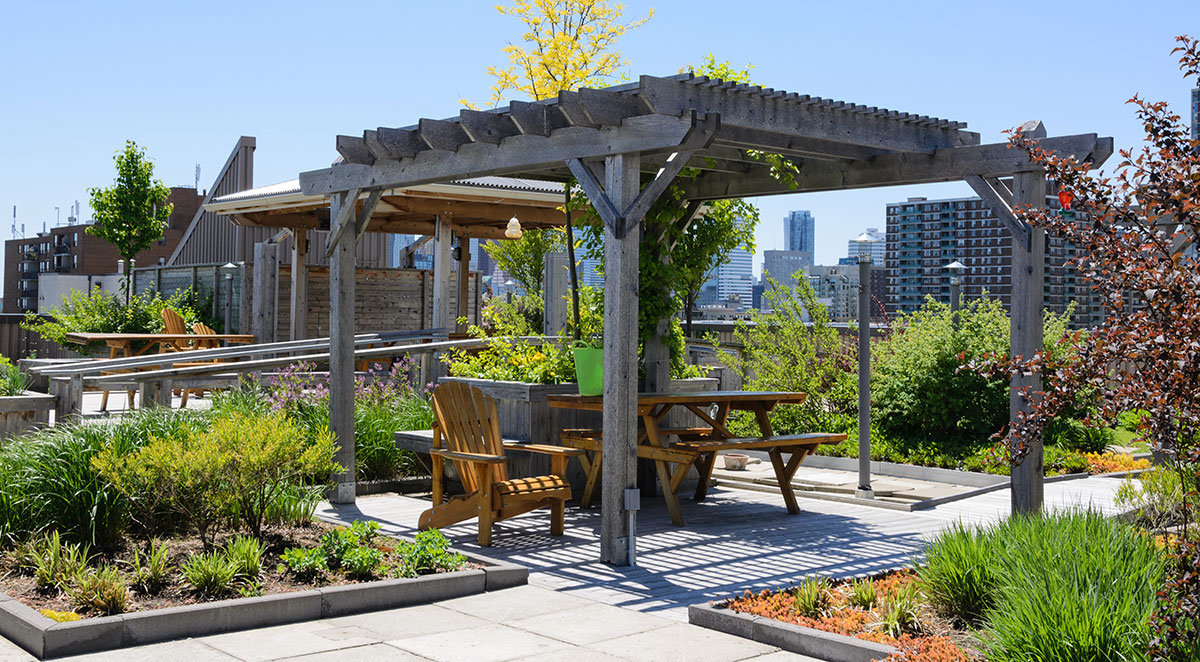
Rooftop gardens in Montreal are some of the most rewarding spaces to design. They sit above the city, away from the noise and density, and offer a rare sense of privacy in an urban environment. But they also come with challenges. Strong winds, heavy snow, and extreme temperature changes mean every decision has to be intentional.
I am Frank Saltarelli, a Montreal-based landscape designer and founder of Saltarelli Outdoor Design. I specialize in creating outdoor spaces that are both beautiful and built to last. Rooftop gardens are one of my favorite projects because they combine creativity with problem solving. When done right, they become true urban oases that can be enjoyed in every season.
Start With Structure and Safety
Before thinking about plants or furniture, the structure of the roof must be evaluated. Not all rooftops are designed to carry heavy loads like soil, stone, water features, or large planters. A structural assessment is always the first step.
“I always tell clients that a rooftop garden starts with engineering, not aesthetics,” I explain. “If the structure is not properly assessed, nothing else matters.”
Weight distribution is key. Lightweight materials, modular planters, and smart design choices help reduce stress on the building. Drainage is equally important. Water must be able to flow properly to avoid damage to both the roof and the garden.
Design for Wind, Snow, and Climate
Montreal weather is one of the biggest factors in rooftop design. Wind exposure is much stronger at higher elevations, and winter snow can add significant weight.
To manage this, I often use wind barriers such as glass panels, wood screens, or dense plantings. These help create comfort without blocking light or views.
Snow management is also part of the design. Planters, furniture, and structures need to withstand freeze and thaw cycles. Materials must be durable and resistant to cracking or warping.
“I design rooftops with all four seasons in mind,” I say. “A garden that only works in summer is not successful in Montreal.”
Choose Plants That Can Handle the Environment
Plant selection is one of the most important parts of a rooftop garden. Not all plants can survive wind exposure, shallow soil depths, and temperature swings.
Hardy, low-maintenance plants are essential. Evergreens provide structure year-round. Ornamental grasses add movement and texture. Perennials like sedum, lavender, and echinacea perform well in rooftop conditions.
Evergreens for Year-Round Structure
Evergreens are the backbone of a rooftop garden. They provide color in winter and create a stable visual framework. Dwarf spruce, juniper, and boxwood are all strong choices.
Grasses and Perennials for Movement
Grasses like feather reed grass or blue fescue bring softness and movement. Even in winter, dried grasses add texture against snow and ice.
“I often remind clients that a rooftop garden should look good in January as well as July,” I say. “That is where plant selection makes the difference.”
Use Lightweight, Durable Materials
Material choice is critical for both performance and longevity. Rooftop gardens require materials that are strong but not overly heavy.
Composite decking, aluminum structures, and fiberglass planters are commonly used because they are durable and weather resistant. Natural stone can be used selectively, but weight must always be considered.
Furniture should be outdoor-rated and easy to move or store if needed. Cushions and fabrics must be weather resistant but still comfortable enough for everyday use.
Create Zones for Living and Relaxation
Even small rooftops can feel spacious when divided into zones. I often design three main areas: dining, lounging, and greenery.
These zones help organize the space and make it more functional. A dining table near the kitchen access point, a lounge area with comfortable seating, and a green zone filled with planters create balance.
“I like rooftops to feel like outdoor apartments,” I explain. “Each zone has a purpose, but everything flows together.”
Lighting That Extends the Season
Lighting is essential for making rooftop gardens usable at night and during cooler months. It also adds depth and atmosphere.
Soft LED lighting along pathways, under seating, or within planters creates a warm and inviting environment. String lights or wall-mounted fixtures add ambiance without overwhelming the space.
Good lighting also highlights plant textures and architectural elements, making the rooftop feel more dynamic after sunset.
Privacy Without Losing the View
Privacy is often a priority for rooftop clients. The challenge is creating seclusion without blocking the city views that make rooftops special.
I use layered solutions such as partial screens, tall planters, and strategic plant placement. These create intimacy while preserving openness.
“I always try to frame the view instead of hiding it,” I say. “A rooftop should feel private but still connected to the city skyline.”
Make It Usable All Year
A successful rooftop garden in Montreal should not disappear after summer. With the right planning, it can be enjoyed in multiple seasons.
Fire features, outdoor heaters, and wind protection extend usability into spring and fall. Even in winter, a well-designed rooftop can be appreciated visually from inside the home.
Evergreens, lighting, and strong structural elements ensure the space still feels alive during colder months.
Final Thoughts
Designing a rooftop garden in Montreal is about balance. It requires combining beauty with engineering, and creativity with practicality. Every decision matters, from plant selection to material choice to structural planning.
When done well, a rooftop becomes more than an outdoor space. It becomes a private retreat above the city. A place to relax, gather, and reconnect with nature in the middle of an urban environment.
“I believe a rooftop garden should feel like an escape,” I say. “Even in the heart of Montreal, you should be able to step outside and feel calm, grounded, and at home.”
With careful design and attention to detail, that vision is absolutely possible.